 Cold Plunge Guide
Best Cold Plunge Tub Setup for Small Backyard
A cold plunge tub setup in a compact backyard requires 25-40 square feet of level ground, reliable 240V electrical access within 50 feet, and a drainage plan that handles 150-250 gallons of water discharge. Most homeowners can fit a 4x3-foot tub alongside existing patios or in unused corners, but success depends on choosing the right tub type and understanding your site's constraints before purchase.
How much space do I need for a cold plunge tub setup?
The tub itself occupies 12-25 square feet, but you need an additional 18-24 inches of clearance on at least two sides for safe entry, equipment access, and servicing the chiller unit. A 6x6-foot area works for most plug-and-play models. Measure your available space, then subtract 3 feet from each dimension to find your maximum tub footprint. Account for overhead clearance if you're placing the unit under a pergola or eave—the chiller exhaust needs 24 inches of vertical space. Corner placements save space but complicate plumbing runs if you're connecting to a house water line.
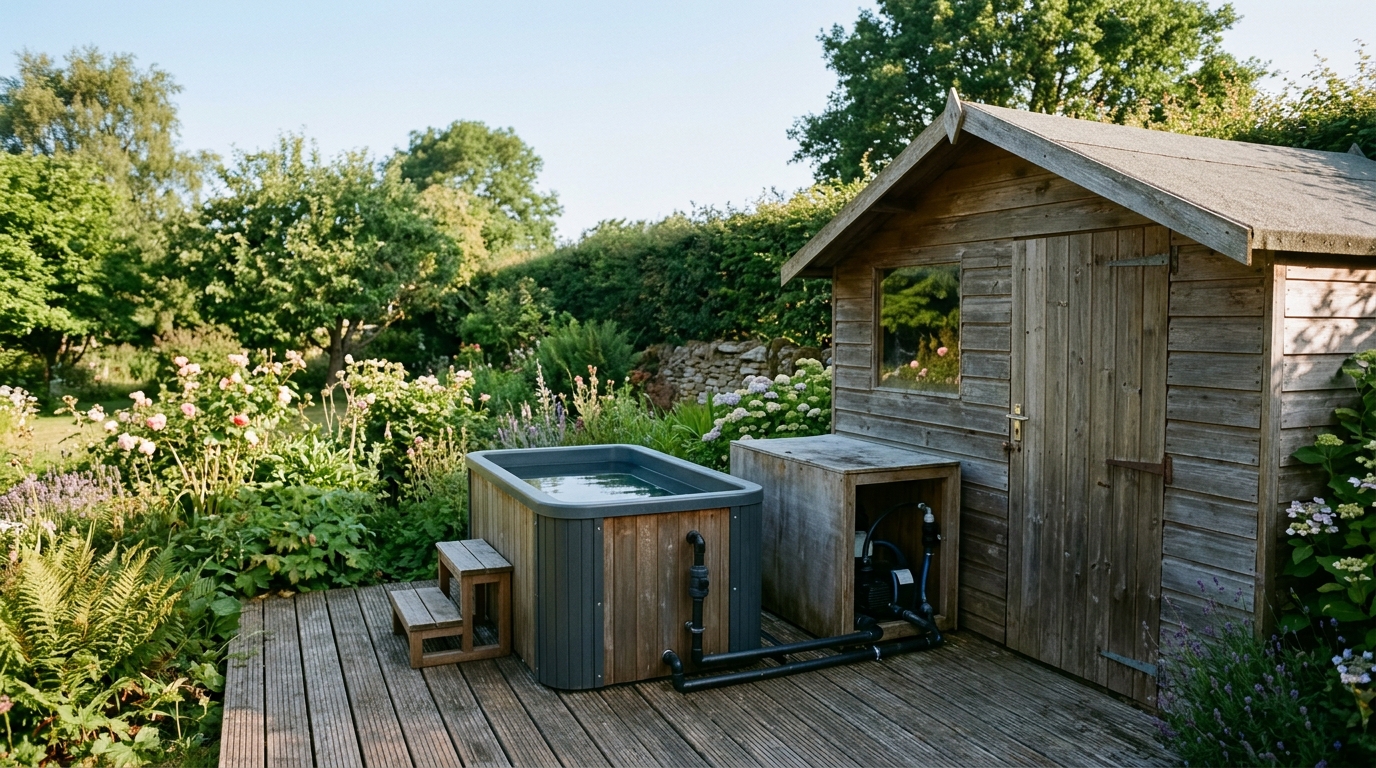
What's the difference between plug-and-play and hardwired setups?
Plug-and-play units run on standard 120V outlets with GFCI protection and cool water to 37-50°F, taking 4-6 hours for the initial chill. They cost $4,000-$8,000 and install in under two hours with no electrician required. Hardwired 240V systems reach 33-39°F in 2-3 hours, handle higher use frequency, and cost $8,000-$15,000 plus $800-$1,500 for electrical work. California and Texas building codes typically classify hardwired tubs as permanent structures, triggering permit requirements. For backyards under 200 square feet, plug-and-play models avoid both permitting delays and the cost of trenching for dedicated circuits.
Do I need a permit for cold plunge tub installation?
Permits depend on whether your tub is freestanding or built-in, and whether it uses 240V hardwiring. Freestanding plug-and-play tubs under 150 gallons rarely require permits in most jurisdictions, though homeowner associations may have separate rules. Hardwired installations, in-ground tubs, or setups with permanent plumbing connections typically need electrical and plumbing permits, which cost $200-$600 and add 2-4 weeks to your timeline. Check setback requirements—many codes mandate 5-10 feet from property lines. Skipping permits risks failed home inspections during resale and potential insurance claim denials if equipment malfunctions cause property damage.
FAQ
**Can I use a stock tank instead of a manufactured cold plunge tub?**
Galvanized stock tanks (100-300 gallons) cost $300-$800 but lack insulation and filtration, requiring separate chillers ($1,200-$2,000) and manual water changes every 3-5 days. They work for occasional use but rust within 18-36 months in outdoor settings.
**How do I handle drainage in a small backyard?**
Route discharge through a 1-inch garden hose to existing landscape drains, French drains, or dry wells at least 10 feet from foundations. Avoid dumping chlorinated water directly onto grass—it kills vegetation in 48-72 hours.
Frequently asked questions
What electrical requirements are needed for a cold plunge tub?
Most cold plunge tubs require a dedicated 220V outlet and GFCI protection, with amperage varying from 15-50 amps depending on the chiller size.
How much space do I need for a cold plunge tub setup?
Allow at least 8x8 feet for the tub plus 3 feet clearance on all sides for maintenance access and safety.
Do I need a permit for cold plunge tub installation?
Most areas require permits for electrical work and plumbing connections, and some classify cold plunge tubs as pools requiring additional permits.