 Cold Plunge Guide
Cold Plunge Tub Setup: Installation Requirements
Cold plunge tub setup requires assessing your available space, electrical capacity, and local building codes before you order equipment. Most residential installations demand 15-30 square feet of floor space, a dedicated 20-amp circuit with GFCI protection, and a level surface that can support 2,000-4,000 pounds when filled. The difference between a smooth installation and a costly mistake often comes down to measuring twice and understanding what your property can actually accommodate.
What electrical requirements are needed for a cold plunge tub?
A cold plunge tub needs a dedicated 20-amp, 120-volt circuit with GFCI protection for plug-and-play models, while hardwired chiller units typically require 240-volt service and 30-50 amps depending on cooling capacity. The GFCI breaker is non-negotiable—it cuts power within milliseconds if current leakage occurs, preventing electric shock in wet environments. Hardwired setups cost $800-1,500 more in electrician fees but deliver faster chilling and lower operating costs. Run your circuit within 15 feet of the installation point to avoid voltage drop. California and Texas both enforce NEC guidelines requiring a disconnect switch within sight of the equipment.
How much space do I need for a cold plunge tub setup?
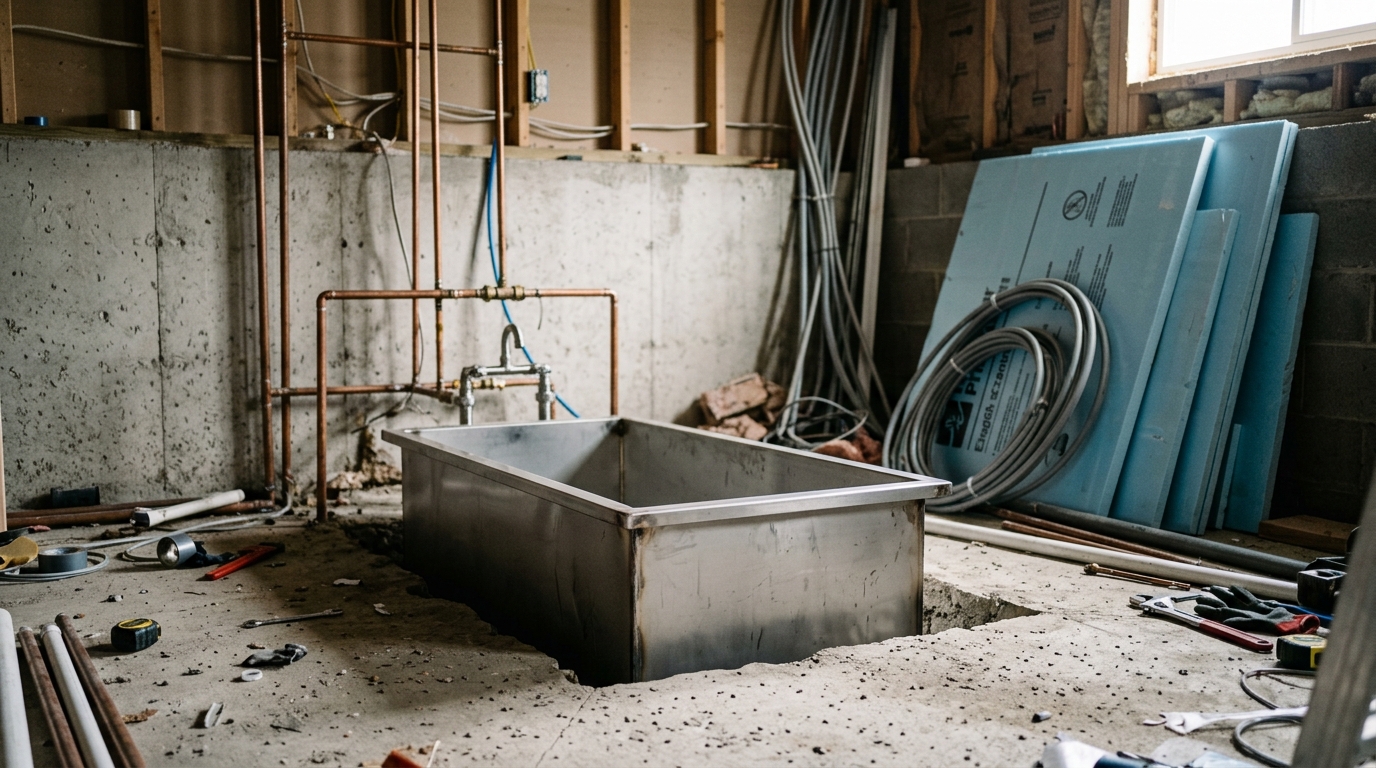
Plan for 48-60 inches in length, 30-36 inches in width, and an additional 24 inches of clearance on at least two sides for equipment access and safe entry. A cold plunge tub setup for home gym installations often fits in a 6x8-foot footprint, while a cold plunge tub setup in garage environments may require ventilation upgrades to handle humidity from evaporation. The floor must be concrete, reinforced decking rated for 100 pounds per square foot, or a structural slab—not standard residential flooring. Stainless Steel and Fiberglass models weigh 150-300 pounds empty, but water adds 8.34 pounds per gallon. A 100-gallon tub means 1,100 pounds total before you step in.
Do I need a permit for cold plunge tub installation?
Most jurisdictions classify permanently plumbed cold plunge installations as structural alterations requiring permits, while portable plug-and-play units often fall under the same rules as hot tubs—check your local building department. Electrical work almost always needs a permit and inspection. Permit costs run $150-400 and add 2-4 weeks to your timeline, but they ensure your insurance remains valid if something goes wrong. Skipping permits can void warranties and complicate future home sales.
How long does cold plunge tub setup take?
A plug-and-play unit on an existing concrete pad takes 2-4 hours for delivery, positioning, and filling. Hardwired installations with new electrical runs require 1-2 days for a licensed electrician, plus another day if you're pouring a new pad or building a base. Cold plunge tub setup for beginners benefits from professional help—improper leveling causes uneven wear on seals and pumps.
**FAQ**
**Can I use PVC plumbing for my cold plunge drain line?**
Yes, Schedule 40 PVC handles cold water drainage without issue. Run a 1.5-inch or 2-inch drain line with a P-trap to a sewer connection or drywell, maintaining a 1/4-inch-per-foot slope.
**Do indoor installations need special ventilation?**
Indoor cold plunge tub setups release moisture that can cause mold. Install an exhaust fan rated for 50-80 CFM or ensure the room has existing HVAC circulation and a vapor barrier on walls.
Frequently asked questions
What electrical requirements are needed for a cold plunge tub?
Most cold plunge tubs require a dedicated 220V outlet and GFCI protection, with amperage varying from 15-50 amps depending on the chiller size.
How much space do I need for a cold plunge tub setup?
Allow at least 8x8 feet for the tub plus 3 feet clearance on all sides for maintenance access and safety.
Do I need a permit for cold plunge tub installation?
Most areas require permits for electrical work and plumbing connections, and some classify cold plunge tubs as pools requiring additional permits.