 Cold Plunge Guide
Cold Plunge Tub Setup: Insulation and Temperature Control Systems
Cold plunge tub setup depends on two core systems: insulation that holds temperatures between 39-55°F without constant chiller operation, and temperature control that maintains precision within 2-3 degrees. A poorly insulated 200-gallon tub can cost $40-70 monthly in electricity just to maintain 50°F, while proper insulation cuts that to $15-25.
Most cold plunge systems use closed-cell foam insulation rated R-20 to R-30, applied in 2-4 inch layers around the shell. Fiberglass tubs typically arrive with factory insulation, but retrofitted stock tanks or custom builds require spray foam or rigid foam board installation. The base needs equal attention—concrete pads conduct cold into the ground, so a vapor barrier plus 2 inches of XPS foam underneath prevents thermal loss. Lid insulation matters equally; an uninsulated cover loses 30-40% of your cooling overnight.
What temperature control systems work for cold plunge tubs?
Temperature control systems fall into three categories: chillers, heat exchangers, and hybrid units. Dedicated chillers (1/4 to 1 HP) cycle refrigerant to cool water directly, pulling 8-15 amps on 120V circuits or 20-30 amps on 240V models. They maintain 39-42°F reliably but cost $1,200-3,500. Heat exchangers connect to existing pool equipment or geothermal systems and work well in moderate climates but struggle below 35°F ambient. Hybrid systems combine chilling with ozone or UV sanitation, adding $800-1,200 to base costs but reducing chemical needs by 60-80%.
How does insulation thickness affect operating costs?
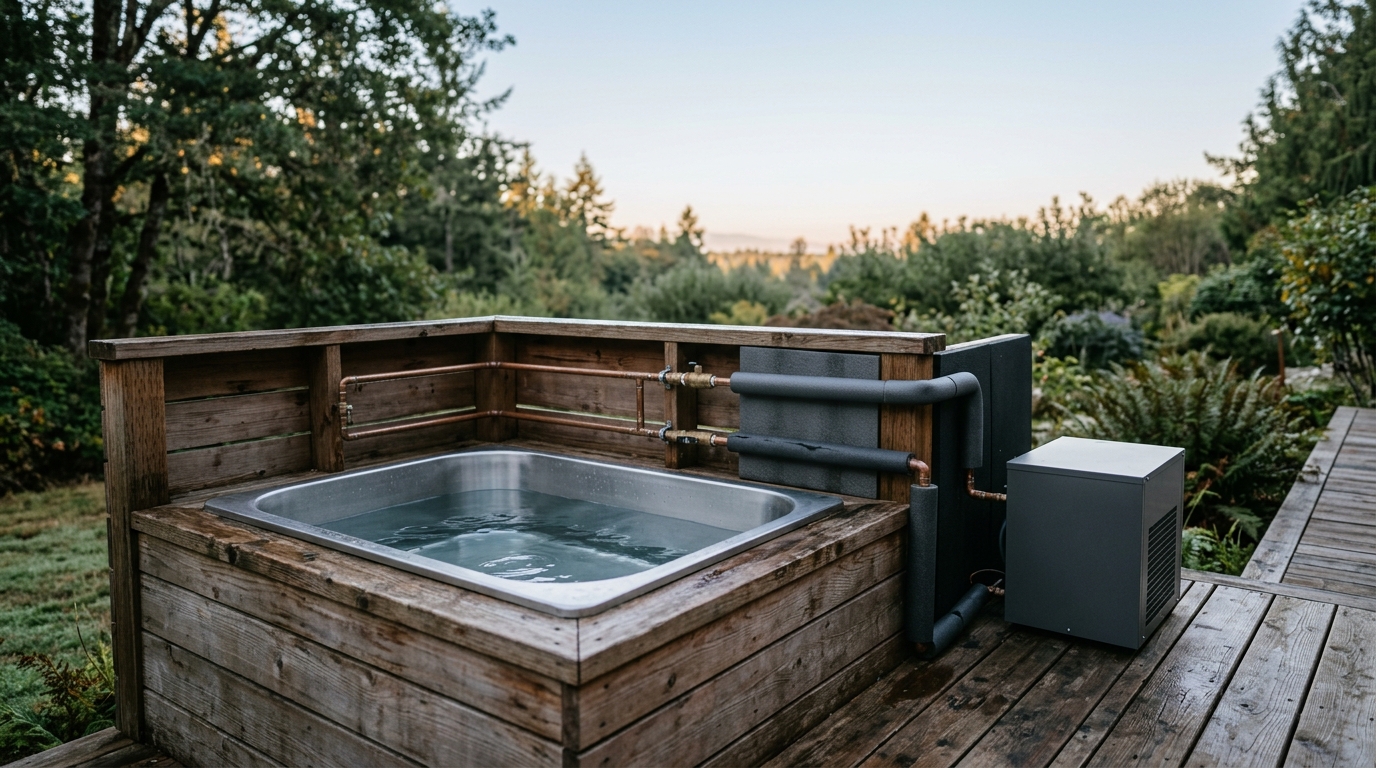
Insulation thickness directly controls compressor runtime and monthly expenses. A 150-gallon tub with 1-inch insulation in Texas summer heat runs its chiller 8-12 hours daily, consuming 180-240 kWh monthly. Upgrading to 3-inch insulation drops runtime to 4-6 hours and cuts consumption to 90-120 kWh. Each additional R-value of insulation reduces heat gain by roughly 15%. Stainless Steel shells conduct heat faster than Fiberglass or PVC, requiring thicker insulation—typically 4 inches versus 2-3 inches for polymer materials.
What are common insulation mistakes in cold plunge installations?
The biggest mistake is neglecting plumbing line insulation. Exposed pipes between chiller and tub gain 5-8°F per 10 feet of uninsulated run, forcing the chiller to overcorrect. Use closed-cell pipe insulation rated for outdoor use, minimum 3/4-inch wall thickness. Second: inadequate air gaps. Insulation compressed against the shell loses 40% effectiveness; leave 1/4-inch space for full R-value. Third: ignoring moisture barriers. Without vapor barriers, condensation saturates insulation within 6-18 months, destroying thermal performance. California and other humid regions need particular attention to sealed, moisture-resistant materials.
**FAQ**
**Does a cold plunge tub need constant power?** Most systems run intermittently once target temperature is reached—typically 15-20 minutes per hour in well-insulated setups. GFCI protection is mandatory for all electrical connections.
**Can I use ice instead of a chiller?** Ice works for occasional use but costs $8-15 per session for 40-60 pounds needed per plunge. Chillers break even after 80-120 uses.
Frequently asked questions
What electrical requirements are needed for a cold plunge tub?
Most cold plunge tubs require a dedicated 220V outlet and GFCI protection, with amperage varying from 15-50 amps depending on the chiller size.
How much space do I need for a cold plunge tub setup?
Allow at least 8x8 feet for the tub plus 3 feet clearance on all sides for maintenance access and safety.
Do I need a permit for cold plunge tub installation?
Most areas require permits for electrical work and plumbing connections, and some classify cold plunge tubs as pools requiring additional permits.